
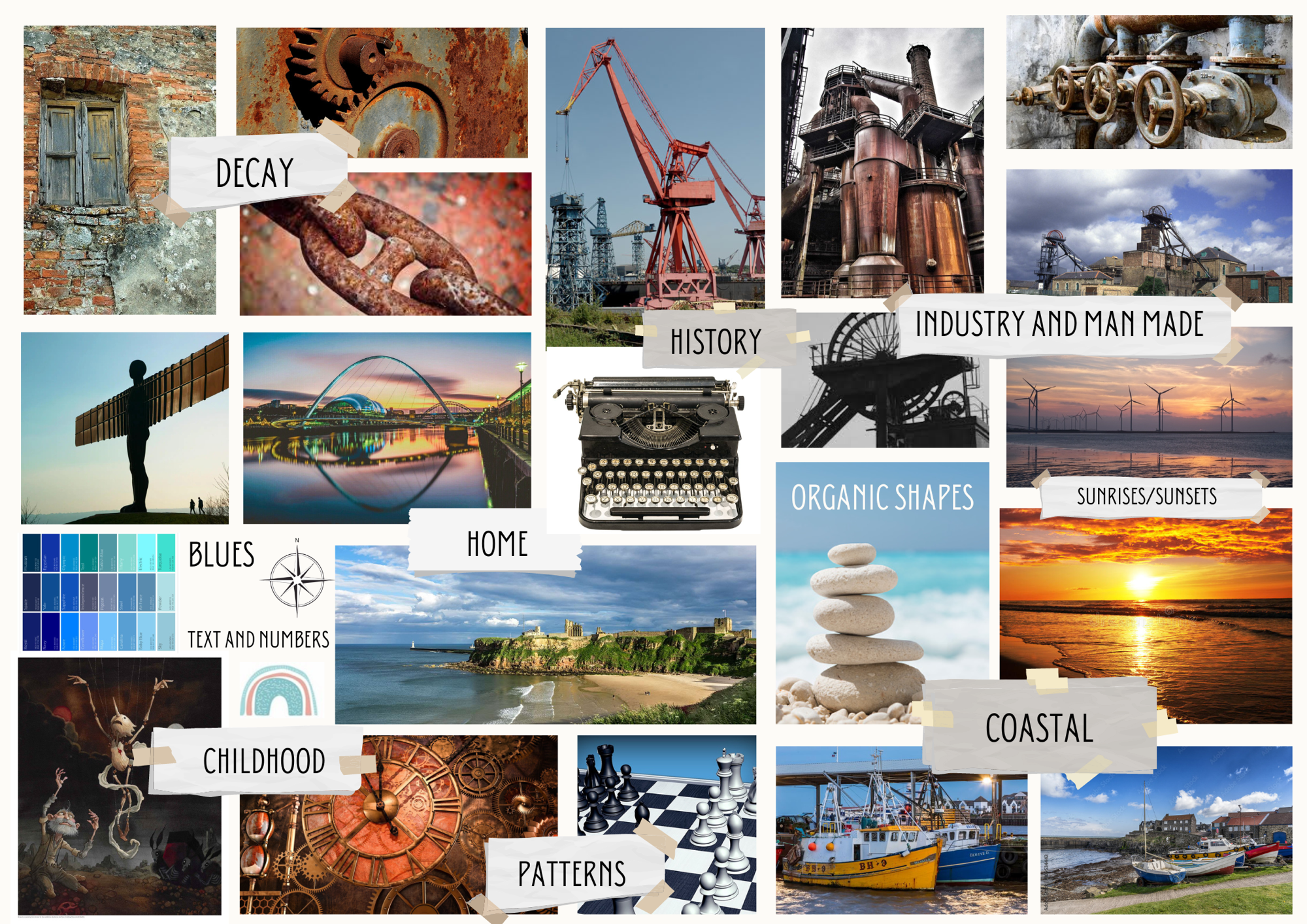
Over the past couple of months, I’ve experienced a burst of creative focus and productivity, which, quite frankly, is unusual for me. Before this, I found myself painting without much direction, hopping between different ideas, and struggling to commit to a project or series that truly sparked my passion.
During some much-needed reflection time over Christmas, I realised that this lack of focus was a major creative roadblock. . I had too many ideas and options, but it felt like I had no clear path forward. So, in February, I revisited an exercise I did back in 2021 during the CVP program: creating inspiration boards.

I’m certainly not alone in using this technique—many artists refer to these as mood boards, inspiration boards, or even springboards. With my studio remodel, my old boards had been tucked away with works on paper—out of sight, out of mind. Taking the time to create new ones has allowed me to rediscover a theme that kept calling me back: harbours and boats. This subject matter has always inspired me, and it felt like the perfect time to return to it.
What is an Inspiration Board?
An inspiration board is essentially a visual collage that brings you joy and as the name suggests inspires you creatively. It is often a collection of images, but it can be as simple as a list that helps you to connect to what you’re passionate about. It captures the essence of what inspires you, and it can help trigger new ideas or connect the dots between ideas in your artwork. Personally, I find visual boards (a mix of images and colours) work best, but when I first did this exercise, I started with a simple list of thoughts and ideas.

Why does this help?
The act of creating the board is as important as the board itself. It requires reflection on what truly excites you and inspires your art. What are you drawn to? What keeps you interested? Because if something excites you, it will keep you engaged, and that energy will show in your work.
Transforming this into a collection of visuals gives you a gentle reminder which can be invaluable when you have a dip or when you want to stay focused on a project. Like many artists I scribble ideas in my sketchbooks, but I use these daily and completed books get stored away on a high shelf in my studio – often forgotten. In contrast, my inspiration boards are pinned on my wall, so I see them daily and remain connected to my ideas.
The Benefits of Inspiration Boards
Creating an inspiration board has many benefits, especially for artists:
- Focus: Being clear on what interests you can help you to clarify your artistic vision. It helps you to identify what is unique about you as an artist. It also helps you understand your roadmap, especially when you feel overwhelmed by ideas and possibilities.
- Motivation: We all have tough days. You get into the studio maybe feeling a bit uninspired and tired and think ‘Where do I start?’ Having a great inspiration board can reignite that creative spark. It’s like a visual reminder of why you started creating art in the first place.
- Exploration: Creating an inspiration board encourages you to explore different ideas. Maybe you’re passionate about walking but haven’t really considered landscapes? I had music down on some of my boards and realised I’d dropped into the habit of switching the TV on when I entered the studio so I stopped and started listening to music that got me moving and it made such a difference.
How to Create Your Own Inspiration Board
So, where do you start? For me, it always begins with writing a simple list—almost like a stream of consciousness. It’s easier to jot down your ideas before deciding how to transform them into a visual form. I typically tackle this process over a couple of days, adding to the list as thoughts come to me.
Once you have a list that you are happy with there are lots of different ways to transform these into an inspiration board. One of the most beautiful boards that I saw wasn’t a board at all. Artist Julia Weston who paints in a shed in her garden created a 3D board with twine hanging from the ceiling and cards pegged onto the twine – it was stunning! But my advice would be don’t get too hung up on how you do this, just dive in!
The first decision to make is whether you want to go physical or digital. Once you know how you want to proceed start by gathering your materials. For my first Creative Visionary Programme, I created a simple collage on an A2 board, spending a day going through old magazines, cutting out pictures, and where I couldn’t find images that I needed I printed out photos from my phone as well as those I’d found online. As I did this, I found myself getting inspired by the process. Who wouldn’t when you’re just looking at pictures of things you love?!

For my second CVP, I used a cork notice board and pinned images. I loved the flexibility of being able to remove and add images as my vision became clearer. And for my second CVP I went digital. I couldn’t quite find the right images in magazines and our printer was playing up so I used Canva to create the boards – its simple to use and the free package is good enough.

No matter which method you choose, be sure to place your inspiration board somewhere visible. I printed out A3 copies when I’d completed this so I could stick them on my wall, and I also printed out smaller copies to stick in my journals and sketchbooks. Its important to place your boars somewhere visible, where you’ll see it often. To ensure it becomes a constant source of energy and inspiration.

Adding Personal Touches
An inspiration board doesn’t have to be limited to just images. You can add paint swatches, quotes that you love, or even physical objects like fabrics or labels. My pin board is full of DIY paint swatches that you get at DIY shops — great for inspiration when it comes to colour palette choices. I also often add post-it notes with scribbled ideas or thoughts that I want to explore further.

Update Your Board Regularly
Final thought from me is to make sure that your inspiration board is an evolving piece. Do this exercise regularly. As you grow as an artist, your inspirations and interests may change. Update your board regularly with new materials, images, and thoughts that reflect your current creative journey. I often do this as I complete one project and am looking to move on to the next. In fact I have created boards that reflect different areas of interest when I was trying to land on new ideas for my next works. Revisiting this regularly will keep your board relevant and energising, and hopefully help push you to explore new paths.
Conclusion
Creating an artist inspiration board is more than just collecting images – it’s a way to explore, reflect, and organise your ideas, emotions, and dreams. By making it a regular part of your creative process, you can reignite or reconnect with your passions, break through creative blocks, and find new directions for your art. Whether you opt for physical or digital, your inspiration board is a constant studio companion helping you stay the course.
4 responses to “How to Create an Inspiration Board for Your Art”
Thanks for this Nic. You’ve inspired me to do this ..my current ‘board’ is a really just a collection of similar images and no longer reflects the kind of art I want to make. Time for a proper inspiration board!
Glad you are feeling better. What a wonderful start to Spring!
Cheers
Sue x
I’m so pleased it was useful I have to keep reminding myself to do this regularly
Thanks for that, Nicola! I first did CVP in 2020 but now find myself ‘stuck and lost’; it’s been getting me down. I’m so glad I stumbled on your blog.
I was exactly the same in fact I dug out my CVP notes and am working through them again. I think we all fall back into unhelpful habits